
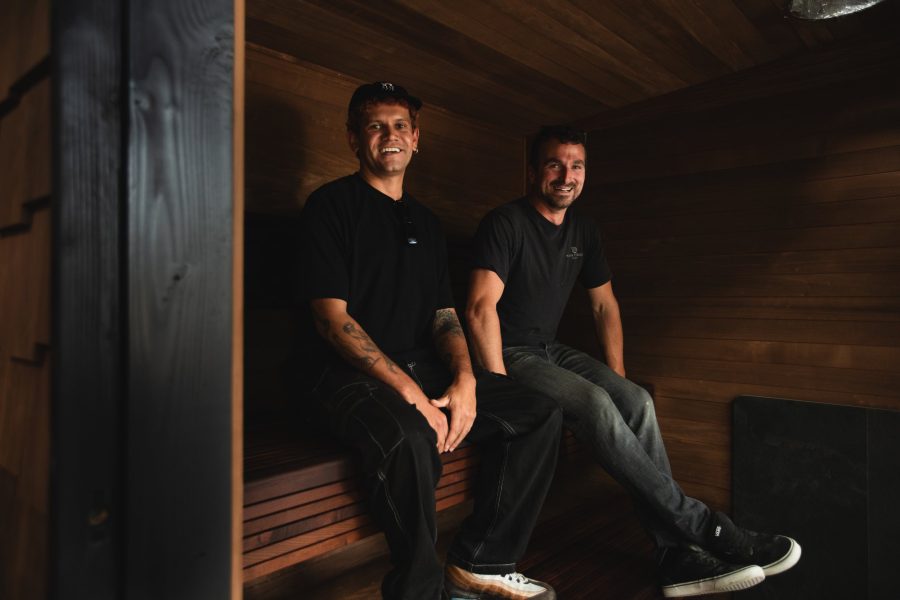
Earlier today I had the pleasure of catching up with Luke Coleman, garden designer based in Edinburgh, who last year won the prestigious Young Designer of the Year award for his garden Drakkas Drift, exhibited at RHS Wodehouse Woodhouse.
Luke is someone I’ve been meaning to sit down with for a while now. He studied the first two years of his undergraduate degree with Scott at Eden before moving to Edinburgh to complete his studies. We have a lot in common in terms of styling and our approach to building and planting gardens, so it was genuinely great to reconnect.
Our conversation covered a lot of ground: planting in low-mineral substrates, Luke’s plant choices when approaching a new garden, funding and sponsorship for show gardens, and our shared views on how gardeners are perceived in wider society and within the job sphere.
Luke is very cool. He speaks well and has an urban edginess to his accent — middle England, but not broad London and not overly “home counties” either. He has that edge that creative people have when they’re still up-and-coming: probably a bit skint, completely committed to their craft, and living and breathing their work.
Before studying and qualifying as a designer, Luke worked as a gardener for many years. We both agreed that there’s really no point in designing a beautiful garden with a fabulous planting scheme if there’s no gardener to hand it over to — and that gardener may well be the client.
We shared our admiration for John Little, who heads up the Care Not Capital campaign, promoting the importance of gardeners within garden design and landscaping. At a recent talk, John had a huge slide that read: “Low-maintenance gardens are joyless.” Which I think is hilarious — and absolutely true.
Luke agreed that gardeners should be involved in the design conversation and be at the table alongside architects and garden designers. Gardeners are sometimes seen as low-skilled, but it’s a physically demanding job, not everyone has the capacity to do it, and it requires real knowledge to garden in a way that develops a space and promotes wildlife and biodiversity.
There are practices and skills in gardening that can be learned and refined. Hilldrop — John Little’s place — runs courses for gardeners that do exactly that.
Sand Planting and Low-Mineral Substrates
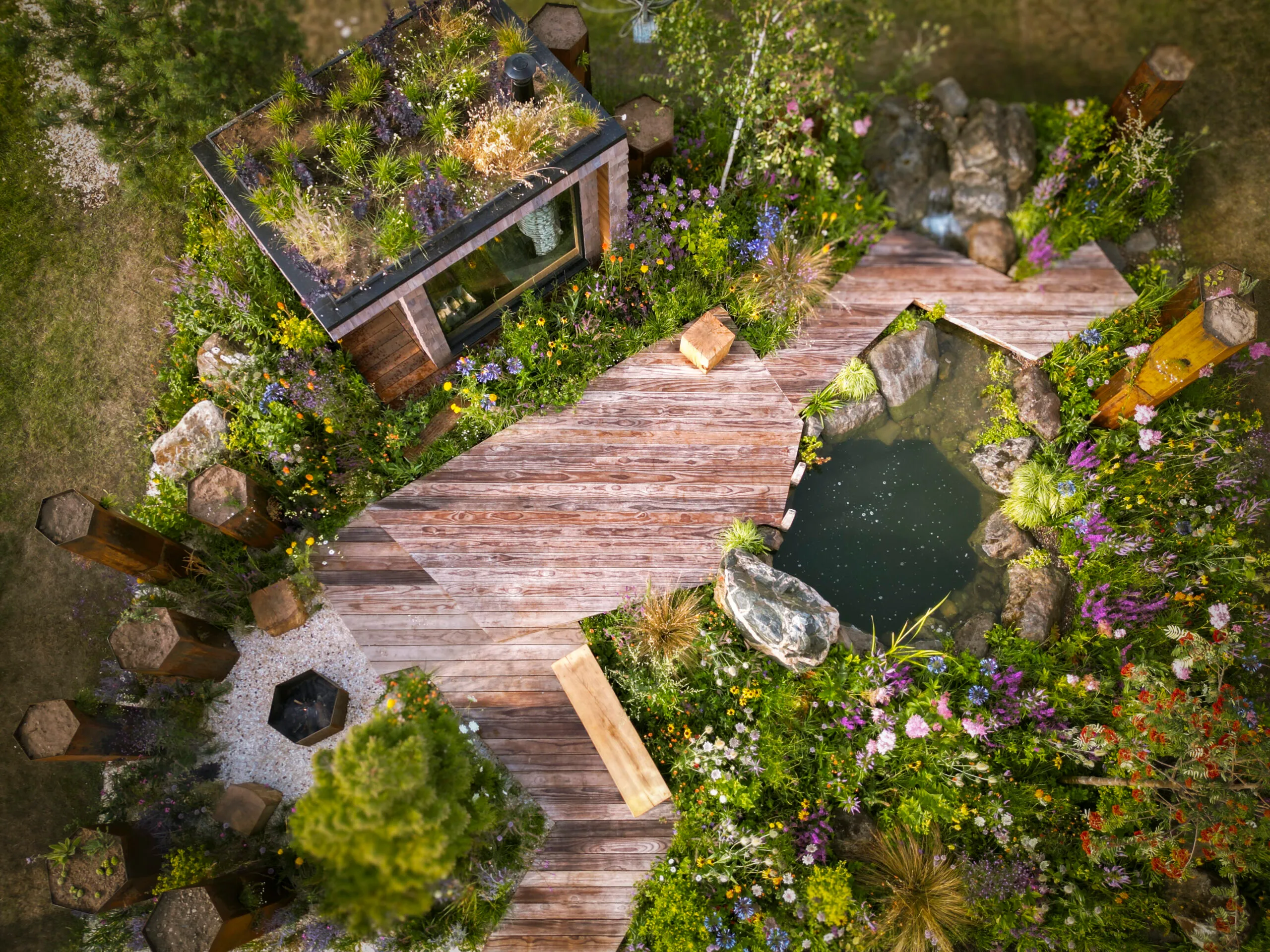
Naturally, our conversation moved on to sand planting and low-mineral substrates — something we’re both deeply interested in and keen to explore more at Alford Landscapes.
Luke spoke about his appreciation for this approach because it allows aggregate waste found at the start of landscaping projects to be recycled and repurposed within planting substrates. He referenced Peter Korn, who plants his beds in concrete sand — which I found unbelievable and fascinating.
The science here is still catching up, but even in crushed brick, concrete, gravels and sands, there are mycelium and bacteria present that are able to break complex materials down into small, manageable minerals that plants can take up. Combined with the porosity for air and water, this means plants that naturally grow at high altitude on rocky mountains can thrive in these conditions.
We’re talking Stipas, Salvias, and similar species.
Luke did note that this aesthetic isn’t for everyone. These schemes often take longer to establish and fill out, and when you really push the substrates, the look can be quite wild. However, seeds germinate extremely well, you can achieve higher planting density per square metre, and there’s huge potential to build a rich tapestry of planting. It’s also drought tolerant — plants are grown “harder” and tend to be less susceptible to pests and diseases.
That said, Luke was clear: if you’re working with heavy clay or lovely, deep, fertile soil, it makes no sense to force a sand-planted scheme. He always works with the site he’s given, responding to its nuances and opportunities. That’s where the creativity lies — genuine originality that comes from responding to place.
Woodland Gardens and Bare-Root Plants
Beyond sand planting, Luke also loves working with woodland gardens and the opportunities that woodland valleys offer for planting.
We spoke about how underrated bare-root plants are, and honestly, he completely inspired me. Off the back of this conversation, I’m determined to seek out bare-root plants wherever possible — particularly when you consider the amount of plastic used in planting schemes.
How many of us have filled vans with plastic pots, most of which end up in a skip after sitting in a shed or unit for years?
Bare-root plants are strong and robust. They’ve been grown in the ground, developing lovely fibrous root systems. They’re lifted when sold rather than grown in pots, lined out, and intensively watered. Often they’re field-grown and only watered by rainfall, meaning a far lower environmental cost in production.
At Alford Landscapes, we’re definitely going to be more mindful about this and actively seek out bare-root perennials where we can. Thank you, Luke.
Drakkas Drift and the Reality of Show Gardens
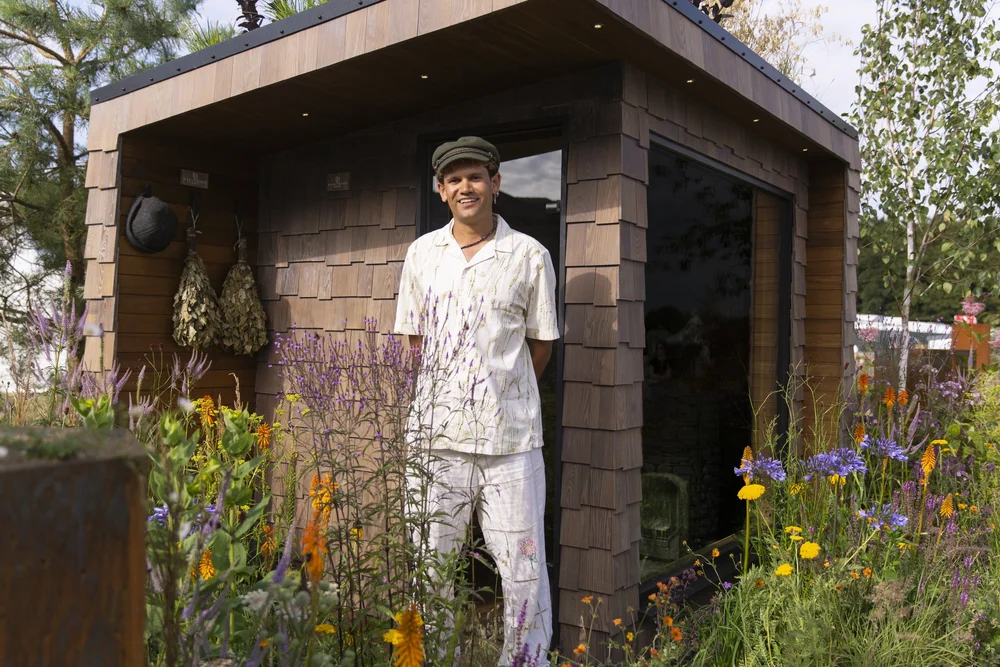
And of course, how could we talk with Luke Coleman and not discuss Drakkas Drift — the garden he exhibited last summer at RHS Wodehouse Woodhouse, winning him the very prestigious Young Designer of the Year award?
From the moment Scott and I saw the design, we were amazed — and, if I’m honest, a little bit peeved that we didn’t think of the idea first. That year, both of us had been immersed in sauna culture, which is really taking off in Cornwall: beautiful wood-fired saunas and wild spa settings appearing all over the place.
Sauna has become a regular practice for Scott and me. Landscaping can be stressful, especially when working in partnership, and sauna time has become a ritual — a way to sweat off stress, talk openly, and resolve things with care.
It was fascinating to hear the reality behind the garden’s funding. We’d assumed Luke had secured a large corporate sponsor — the kind of big marketing-budget partnership that often underpins show gardens. He laughed and said he wished that were the case.
Instead, Luke built relationships with suppliers who sponsored the garden by donating materials and products. Heartwood Sauna, a high-end bespoke sauna company, agreed to feature one of their saunas in the garden. Piece by piece, Luke secured everything he needed to make the project happen.
Only a few weeks before the build did Edinburgh City Council agree to buy the garden, allowing it to be relocated to an old bowling green in the city. Luke is now repurposing it as a sensory garden, adapting it carefully to its new site.
Luke said he simply chipped away at the dream of building a garden at an RHS show. It’s a huge accolade to achieve — and even more so to win the competition. There were countless rejection letters, funding applications that went nowhere, and emails that were never answered. But he never gave up.
And that, more than anything, is what makes the story so inspiring.